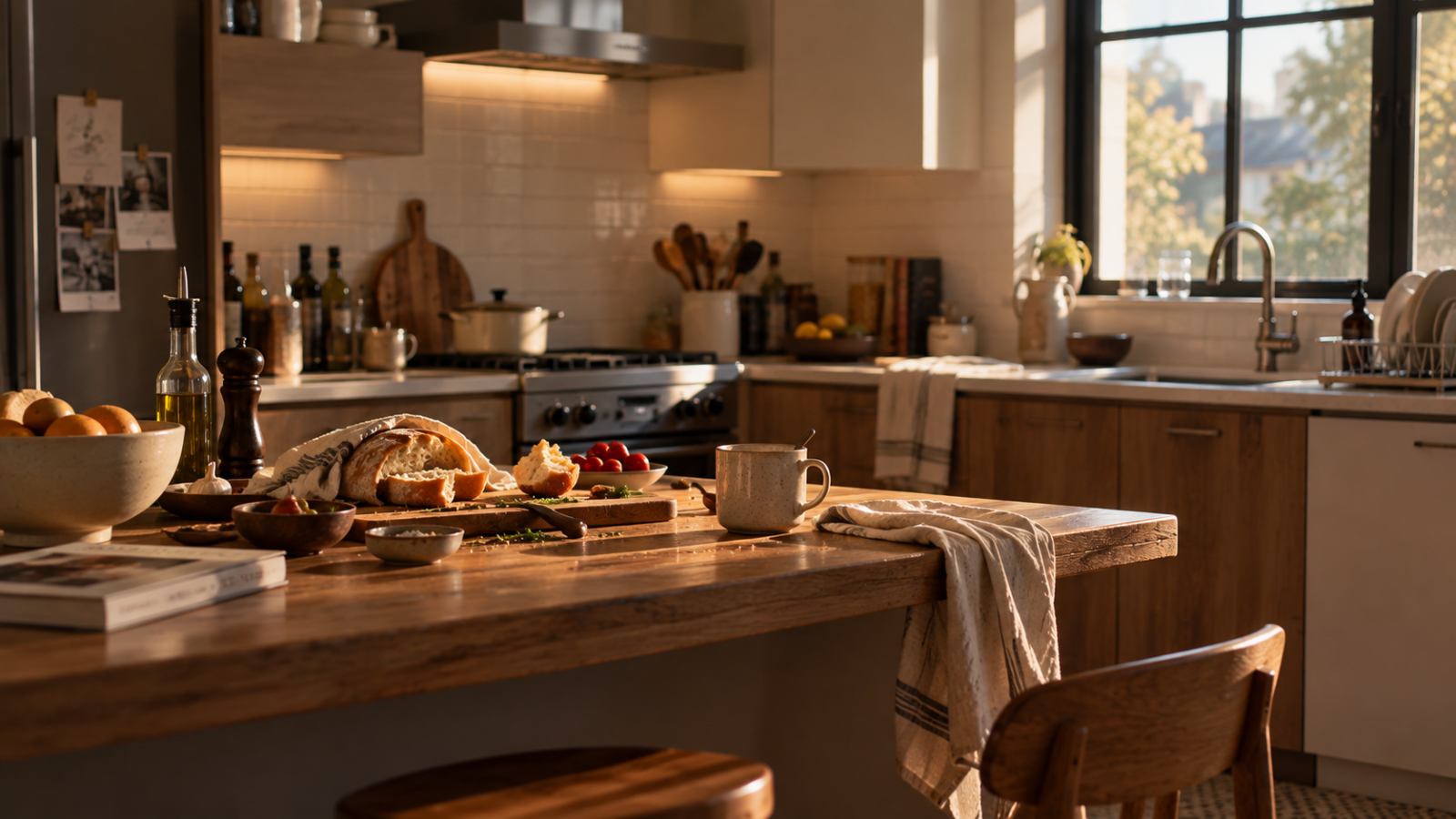
The kitchen can be empty one minute and crowded the next.
Someone comes in for water and stays to talk. A child opens the fridge, looks around and closes it again. Groceries arrive and cover the counter before anyone has decided where everything should go.
By the time dinner starts, there may already be three conversations happening around the person trying to cook.
This is how kitchens seem to collect people.
"Some of the best conversations at home happen while someone is doing something else."
Around the Counter
There is usually a place in the kitchen where people naturally stop.
It might be the end of an island, a stool beside the counter or simply a patch of floor where someone can stand without getting in the way.
From there, stories are told while onions are chopped. Someone tastes the sauce without asking. A visitor accepts a cup of tea and ends up staying longer than expected.
Even clearing the groceries can become a family affair, although half the things being unpacked may disappear before they reach the cupboard.
The kitchen carries on around all of it.
Between One Meal and the Next
Long after breakfast has been cleared, somebody will be back.
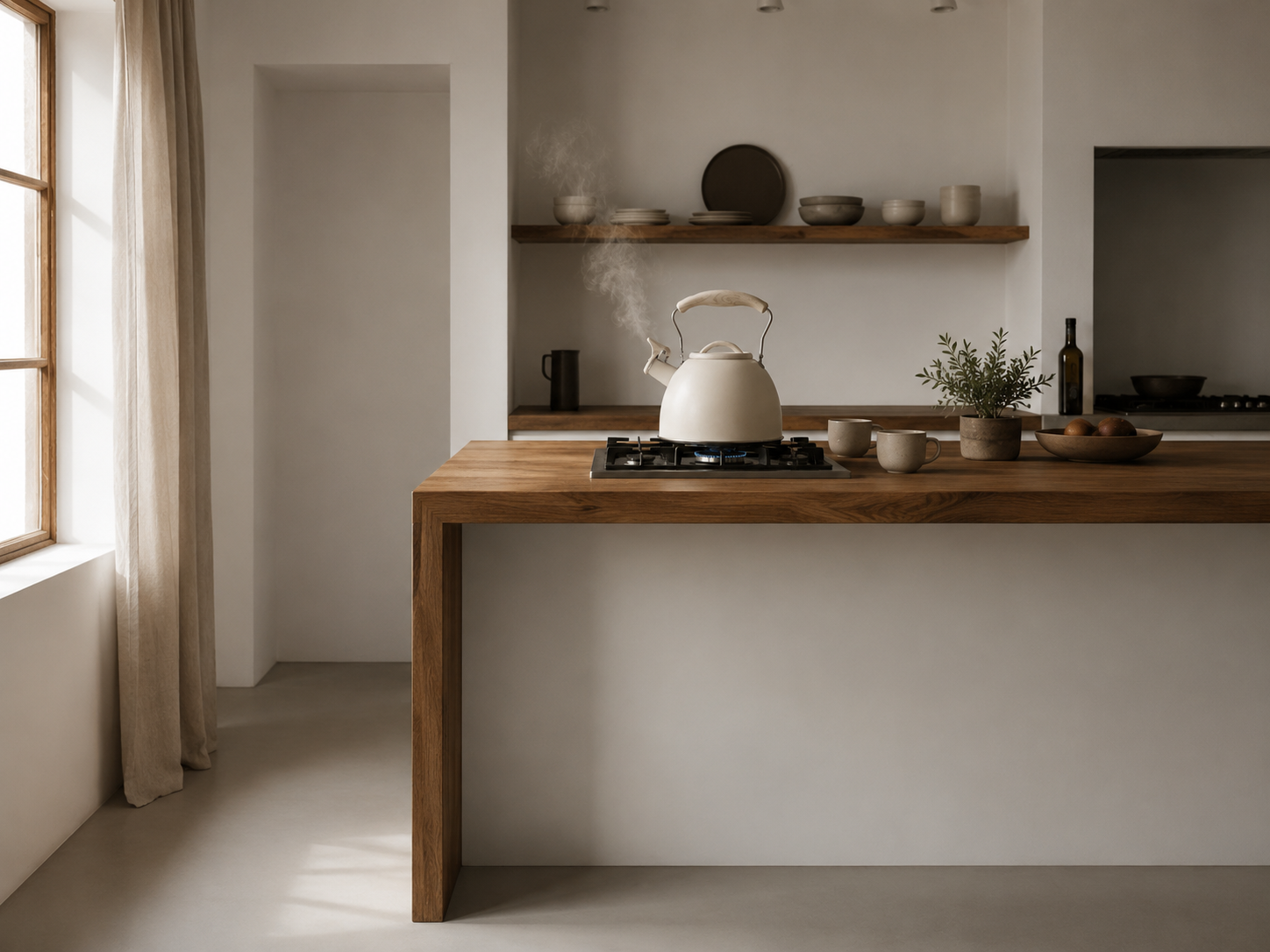
There is lunch to make, fruit to cut, a bottle to fill, leftovers to investigate. Later, the kettle goes on again.
Some days the kitchen works hard. Pots cover the stove and every available surface seems to have something on it. Other days dinner is bread, cheese, something from the fridge and whatever can be put together quickly.
Both kinds of days belong there.
The Room We Keep Returning To
At night, the kitchen often holds the last signs of everyone who passed through it.
A mug beside the sink. Crumbs on the board. A chair pulled slightly away from the table. Tomorrow's lunch waiting in a container in the fridge.
By morning, someone will walk in half awake and reach for the kettle or the coffee before much else has happened.
Then another person will arrive.
And the kitchen will begin again.
There is almost always someone on their way back to it.