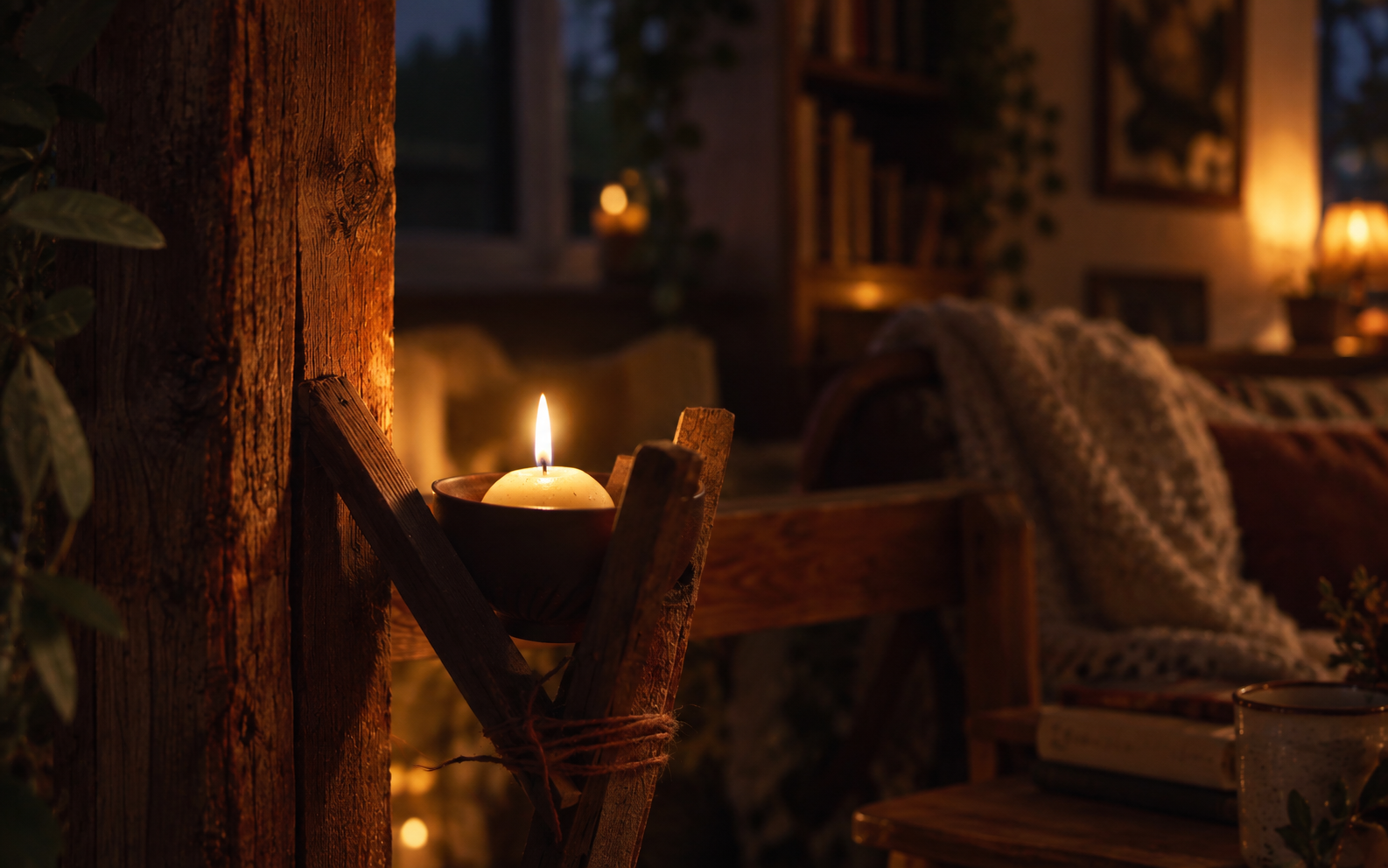
There is something about lighting a candle that changes a room before the fragrance has even had time to travel.
A small flame appears. The light softens. Shadows settle differently against the walls. And somehow, the room we have been walking through all day begins to feel like somewhere we want to stay.
Perhaps that is why candles have remained part of our homes for so long.
We light them at dinner tables and beside baths. We place them near books, on kitchen counters and beside beds. Sometimes there is an occasion. Most evenings, there isn't.
We simply want the room to feel a little warmer.
"Sometimes the smallest light is enough to tell us the day can finally slow down."
A Small Signal to Slow Down
After a busy day, the smallest rituals can help us change pace.
Shoes come off. Curtains are drawn. A lamp replaces the brighter overhead light. Then comes the familiar strike of a match and the first flicker of a candle.
Nothing dramatic has happened, yet the atmosphere has changed.
That little flame can become a quiet marker between one part of the day and another — work and rest, noise and stillness, being somewhere and finally feeling at home.
The Scents We Remember
Fragrance has its own relationship with memory.
Vanilla might bring back a kitchen where something was always baking. Cedar can remind us of old cupboards, winter evenings or somewhere surrounded by trees. Citrus feels different again — clean, bright and familiar.
Over time, certain scents can become part of the identity of a home.
Visitors may notice them before we do.
And years later, catching that same fragrance somewhere unexpected can return us to a room we thought we had forgotten.
Let the Evening Arrive
A home doesn't always need another thing added to it.
Sometimes it needs softer light. A familiar scent. A favourite cup on the table. A few minutes when nobody is rushing to the next task.
Lighting a candle cannot make an evening perfect.
It can simply remind us that the evening has arrived.
And perhaps that is enough reason to strike the match.