Outdoor furniture lives a harder life than most things we bring home.
A dining table can spend years under hard sun, sudden rain and changing temperatures. Chairs scrape across stone and timber. Cushions meet wet swimsuits, spilled drinks and the occasional night left outside.
Two chairs can look equally beautiful when new and age very differently.
The reason is usually found beneath the surface.
Start With the Material
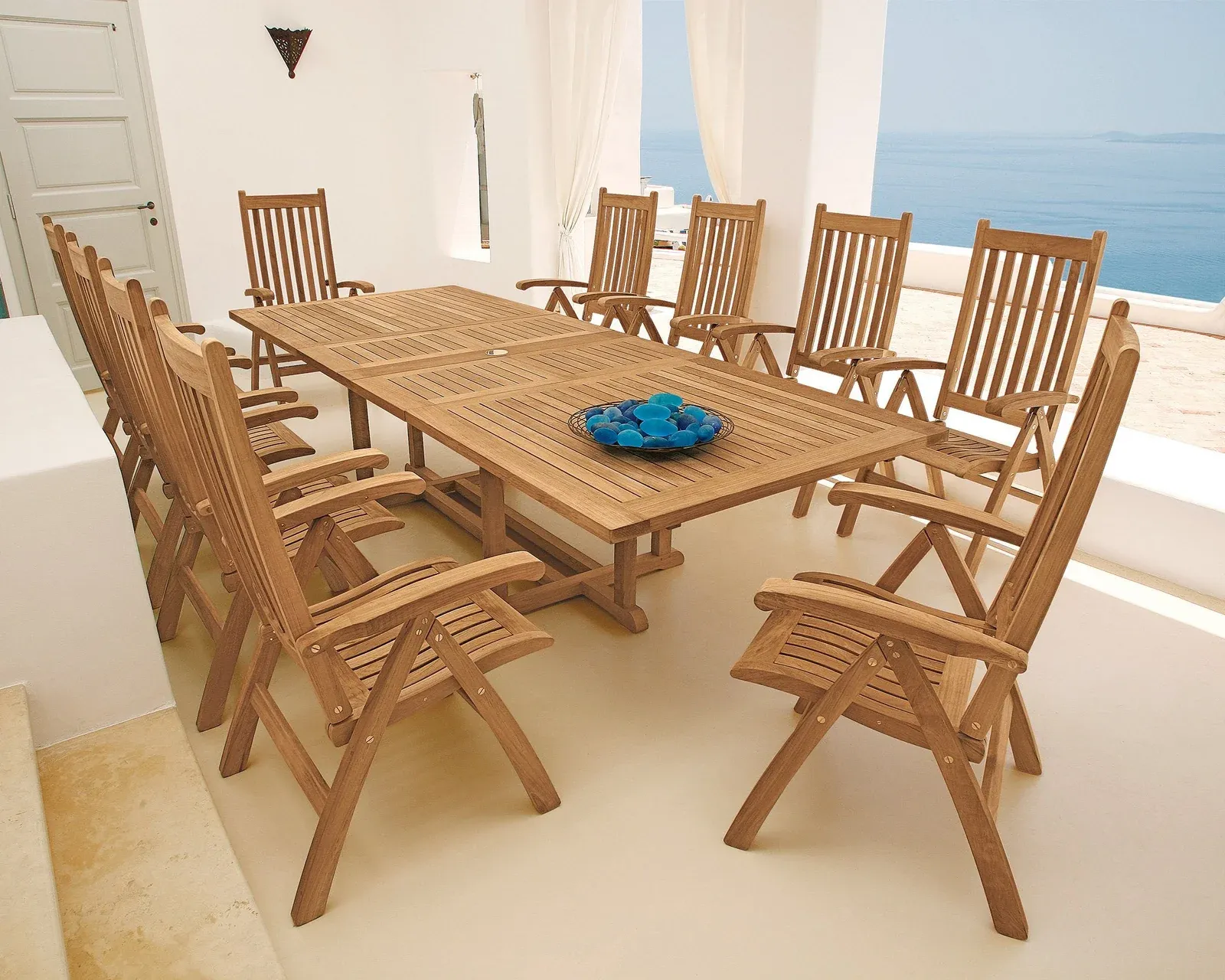
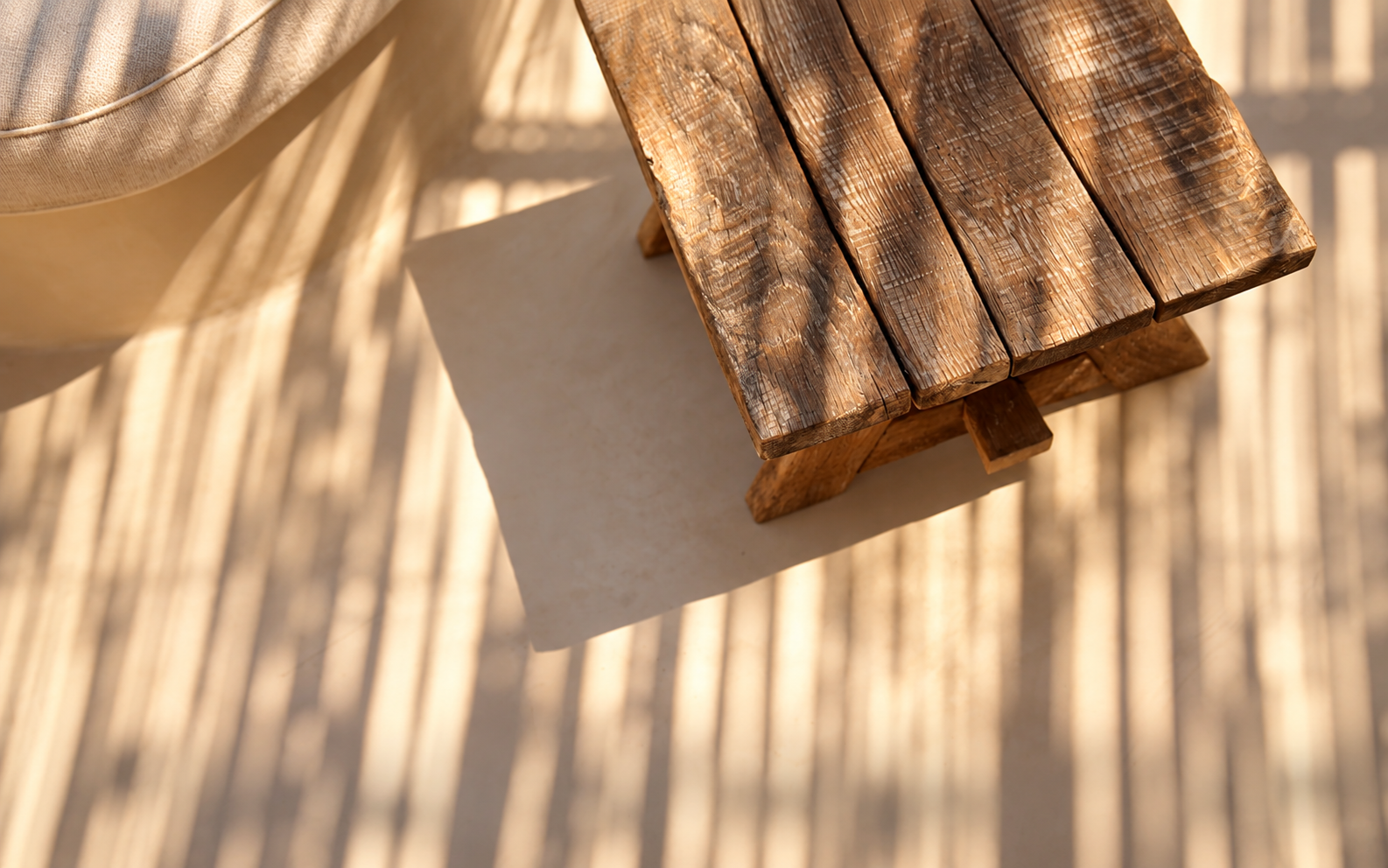
Teak has a long history outdoors. Its dense grain and natural oils help it handle moisture and changing weather. Untreated teak gradually shifts from warm gold to a silver-grey patina — a natural part of the timber ageing rather than a sign of damage.
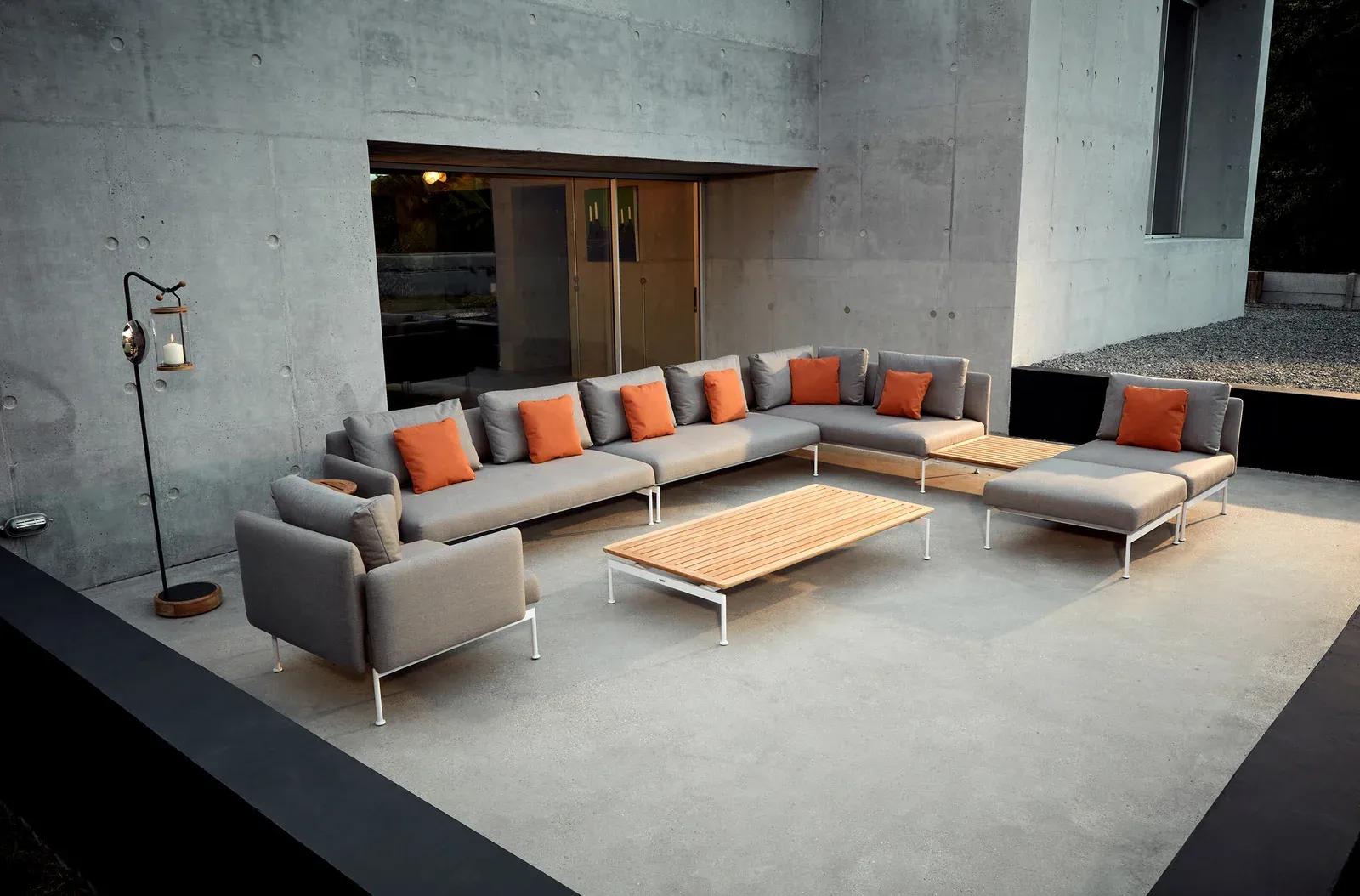
Aluminium brings another advantage: it is relatively light and does not rust like ordinary steel.
Stainless steel offers strength and a crisp architectural finish, but its grade matters, particularly near pools and coastal air.
Then comes the part closest to us.
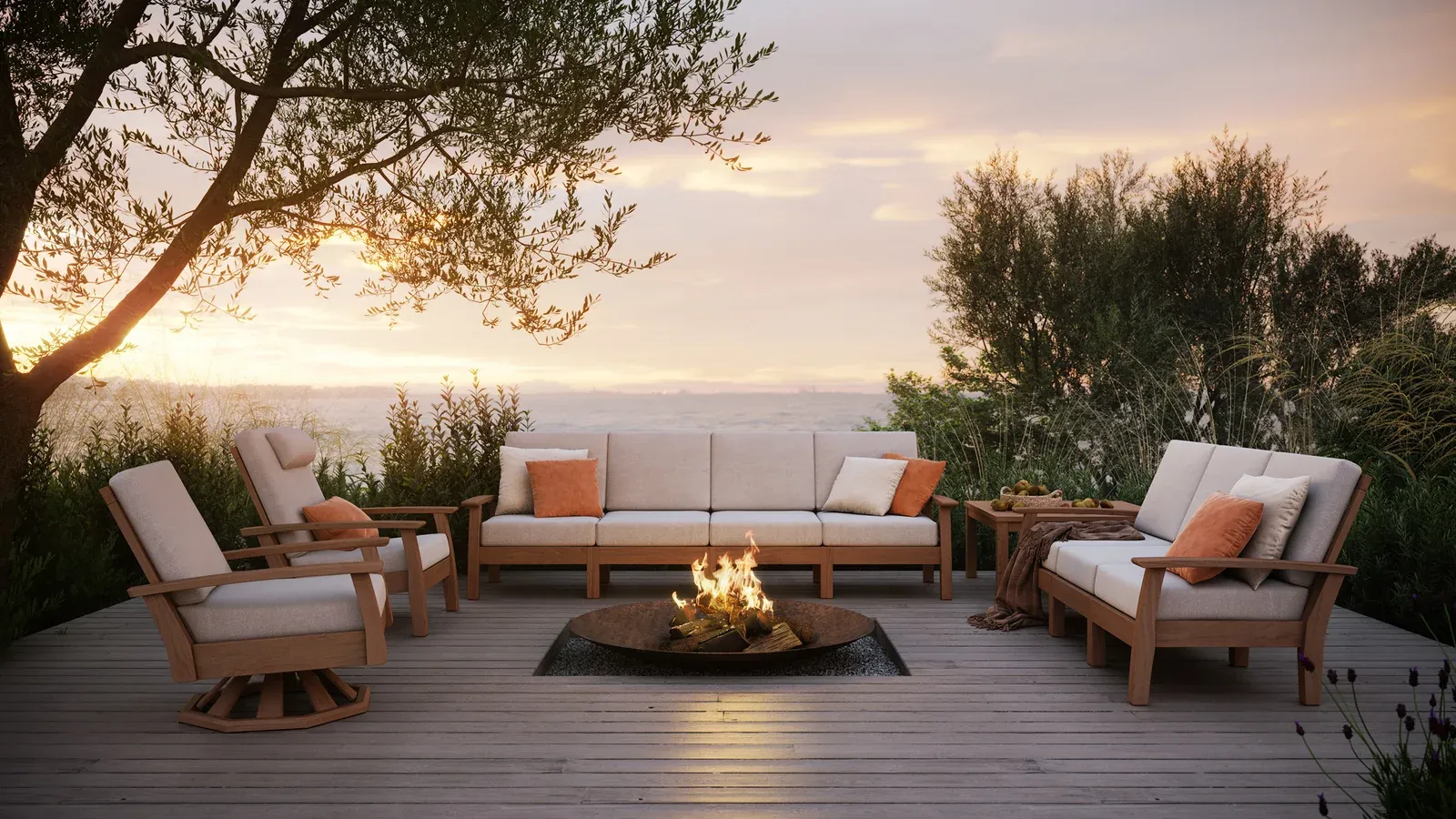
Outdoor fabrics, woven fibres and slings have to tolerate sunlight, moisture and repeated use while remaining comfortable. A strong frame has limited value when the seat stretched across it deteriorates quickly.
“Good outdoor furniture should have a life beyond its first summer.”
Look Beyond the Photograph
Good materials are only part of the story.
Joinery, hardware and construction determine how those materials perform together. A dining table should remain stable after years of use. Woven sections need secure attachment. Rainwater needs somewhere to drain rather than collecting inside the furniture.
Repairability deserves attention too.
Cushions wear. Slings stretch. Covers eventually need replacing. Furniture designed so these parts can be renewed has a better chance of staying in use instead of being discarded with a perfectly sound frame.
Comfort Still Wins
Durability means very little if nobody enjoys sitting there.
Seat depth, back angle, arm position and support all change the experience of a chair. Dining chairs and deep lounge chairs have different jobs. A chair used for morning coffee needs something different from one intended for a long afternoon outdoors.
Scale matters just as much.
A beautiful table can overwhelm a small terrace. An enormous sofa can leave little room for people to move around it.
Furniture has to work with the space and the people using it.
Let Good Materials Grow Older
Outdoor furniture does not have to remain untouched to remain beautiful.
Teak changes colour. Metal collects small marks. Fabric softens. A table gradually carries evidence of meals, weather and years of use.
Care still matters. Timber needs cleaning, hardware deserves checking and cushions last longer when properly stored during severe weather.
But age itself is not the enemy.
Good materials can change while retaining their strength, usefulness and character.
Buy for the Life Around It
Think about what actually happens outside your home.
Long family lunches require something different from coffee on a small balcony. A busy household may value washable fabrics and replaceable components. Coastal living places greater demands on metal. Limited storage changes how cushions and covers are handled.
Price alone cannot settle any of those decisions.
Materials matter. Construction matters. Comfort matters. So does choosing furniture that suits the way the space is genuinely used.
Years later, that decision shows.
The table is still steady. The chair remains comfortable. The timber carries a different colour. A worn component has been replaced rather than the entire piece thrown away.
People gather around it again.
That is furniture worth keeping.