There is a point in the evening when the house begins to change.
It rarely happens all at once.
Dinner might still be on the table while someone carries the first few plates back to the kitchen. A tap runs. Cupboard doors open and close. Someone asks if there is any tea left. In another room, the television has already started.
Outside, there is still enough daylight to see the garden or the buildings across the street, but inside the lamps are beginning to come on.
Slowly, the day gives the house back to the people who live there.
"You can often tell the evening has arrived by the way a house begins to sound."
After Dinner
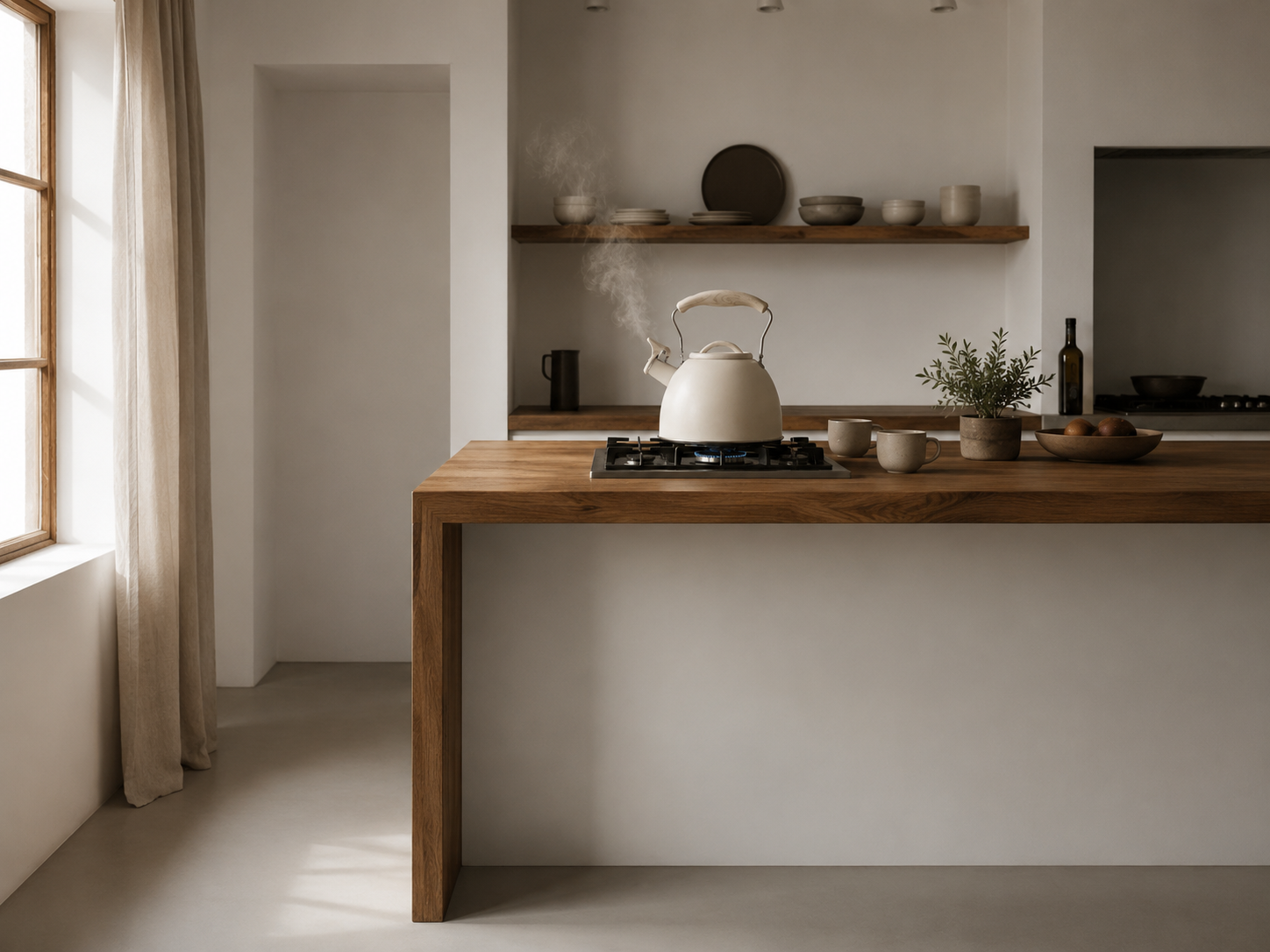
The kitchen usually takes a little longer to settle than the rest of the house.
There are glasses on the counter, a pan waiting to be washed and perhaps enough food left in a pot for tomorrow. Someone wipes the table while someone else disappears before the washing-up begins.
These are ordinary scenes, repeated in homes everywhere in slightly different ways.
Eventually the last plate finds its place. The kitchen light goes off.
When the Smaller Lights Come On
As daylight disappears from the windows, the house starts looking different.
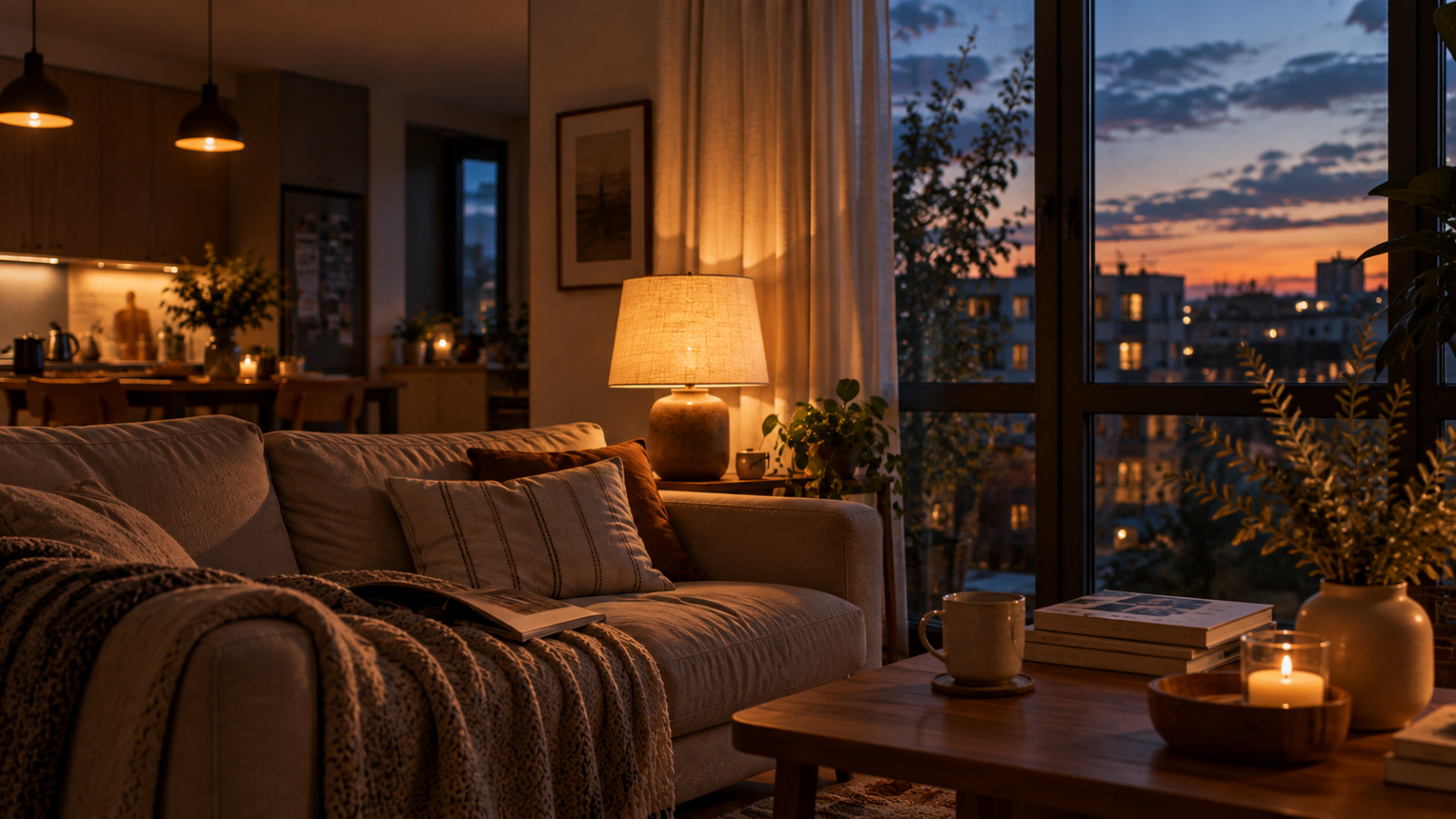
Curtains are drawn. A lamp beside the sofa comes on. Hallways grow darker. The bright light used while cooking is no longer needed.
Things left around during the day become part of the evening scene — a book turned face down beside a chair, shoes near the door, a child's toy under the table, a half-finished glass of water.
Nobody arranged them there.
They are simply signs that people have been home.
The Last Hours of the Day
Later, the rooms become quieter one by one.
Someone makes one final cup of tea. A phone is left charging on the kitchen counter. Doors close upstairs. The television gets turned down.
There may still be laundry waiting for tomorrow or a cup that never made it to the sink.
It can stay there.
Soon the last lamp will go off and the house will be dark again.
Morning will find everything where we left it.